Learner activation
It's estimated that only 5-12% of people complete courses in on-line platforms. My team at Datacamp, an e-learning platform for Data Science skills, wanted to change that for our people and increase activation.
Context
Have you ever switched a career or started learning something new?
If so you probably know that it can be confusing and comes with self-doubt. You aren't alone: it's estimated that only 5-12% of people complete courses in on-line platforms. My team at Datacamp, an e-learning platform for Data Science skills, wanted to change that for our people and increase activation.
We will dive into designing for moments that matter and explore two onboarding changes and their impact on user activation. Over 3 months, we A/B tested different approaches to guide and motivate new users during onboarding, focusing on web and mobile experiences.
As the lead UX/CX designer of the initiative, I collaborated with product, engineering, and content teams. I analyzed user insights and data, set up a custom Design Sprint to enable rapid hypothesis testing and crafted final solutions.
Trigger
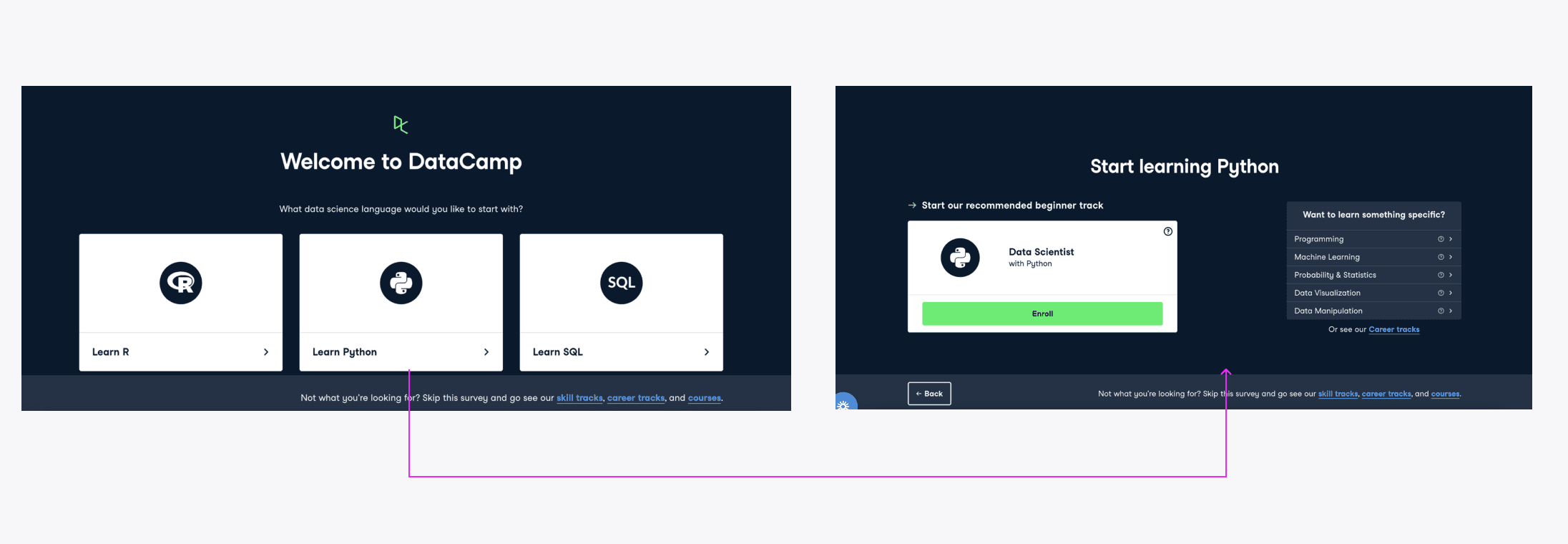
Funnel analysis showed low conversion rates for new learners. Qualitative user insights revealed that some learner segments like career switchers were more prompt to drop-offs. Why?
- Jumping straight into choosing a data technology (Python, SQL, R) as the first step in the process is pushing novice data learners away
- Onboarding copy didn't resonate with career switchers and to these who need more guidance with choose technology and Data Science field: analytics, engineering, ML, AI etc.
- Copy and visual design were too "dry" and failed to motivate and inspire along the way
- Some of the marketing channels and intent were mismatched
Fig. Our starting point: no details about the course on the card, no inquiry about the goals of the person.
Solution
Onboarding is a quick genre. It has to be short but helpful, adding any additional step might lead to worse results. Here are some challenges we faced:
- Balancing choice and complexity: How to offer a variety of data skills paths without overwhelming users.
- Goal setting: Making onboarding goals relevant for different user types.
- Content alignment: Ensuring learning recommendations match user goals.
- Motivation: Keeping users engaged throughout the onboarding process.
- Marketing channel variations: Addressing different conversion rates from various acquisition sources.
- Internal efficiency: We needed a streamlined process for testing and implementing improvements.
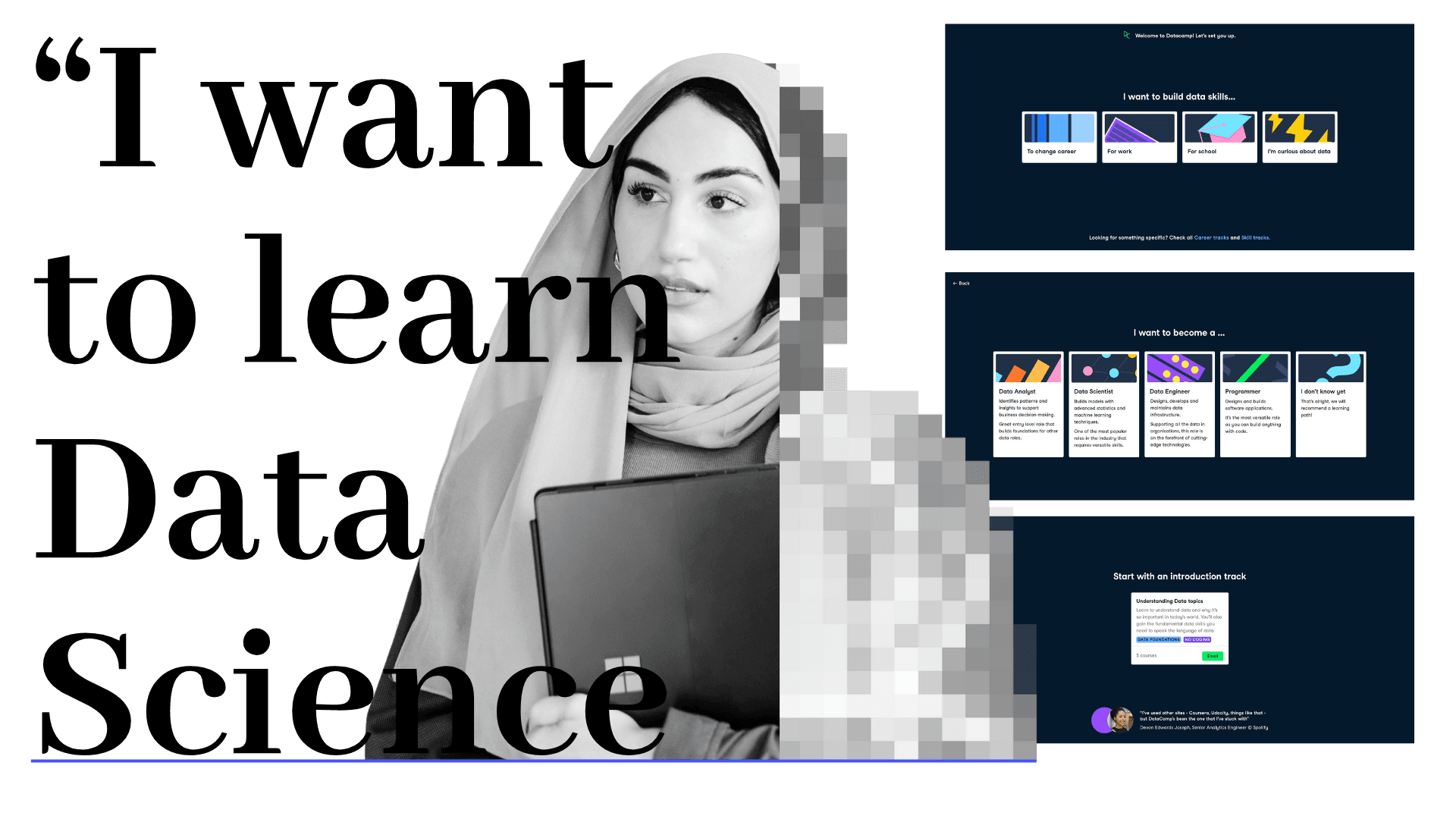
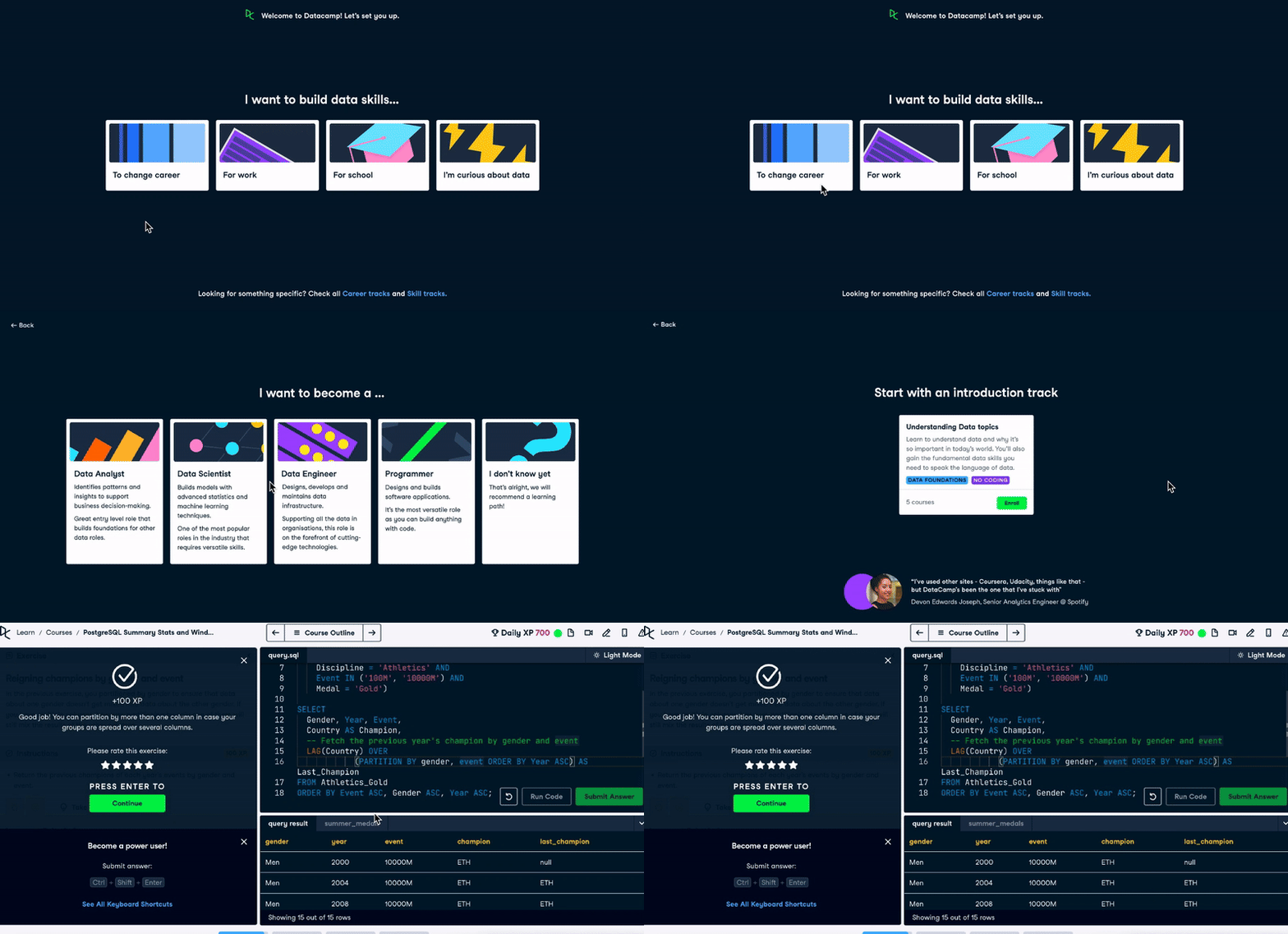
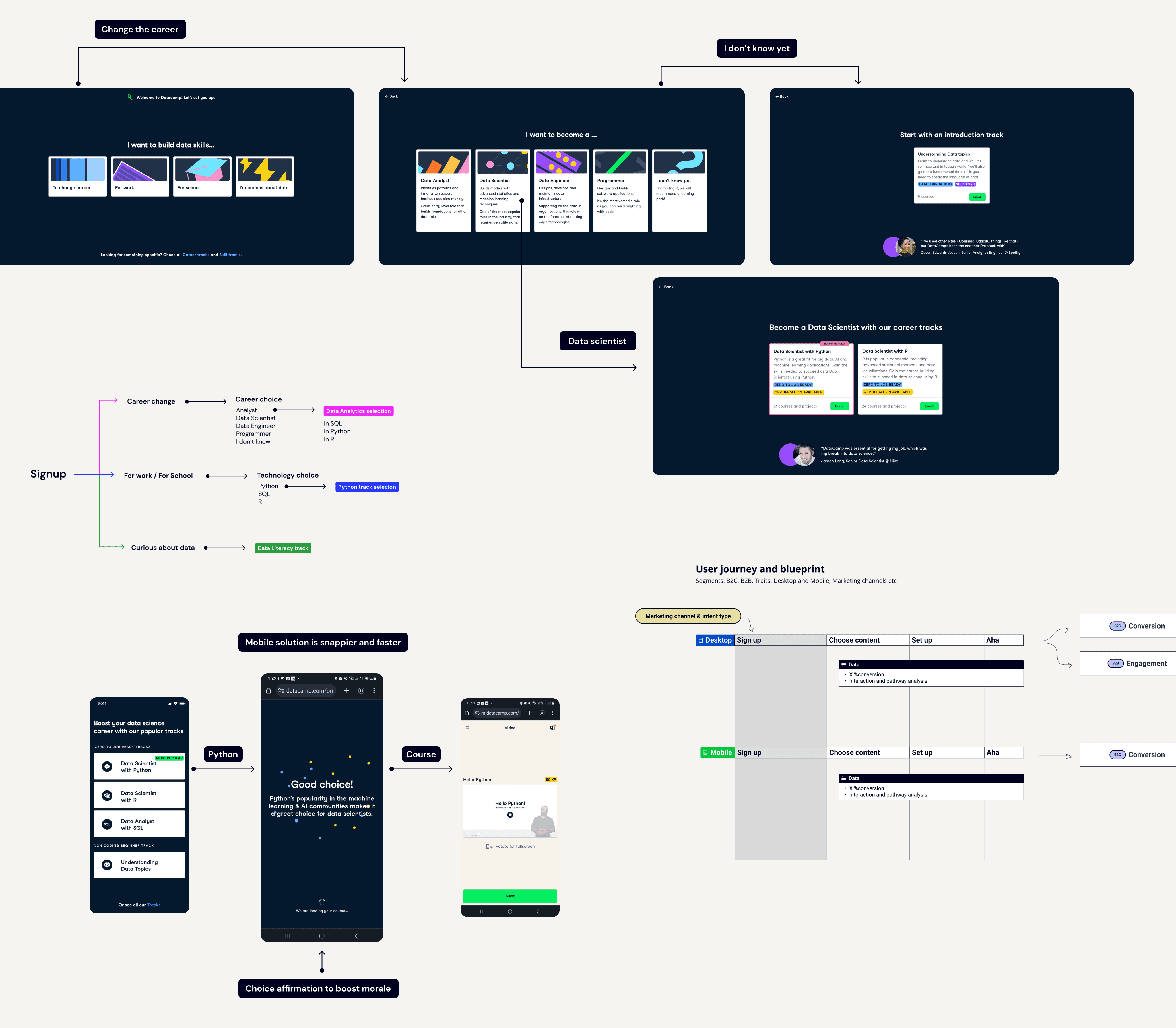
For the web pathway we first introduced a multi-step triage that matched Learner Personas we defined earlier.
- Step 1 - Goal Setting: Added a relatable prompt to identify user career goals ("Change career," "Upskill" etc)
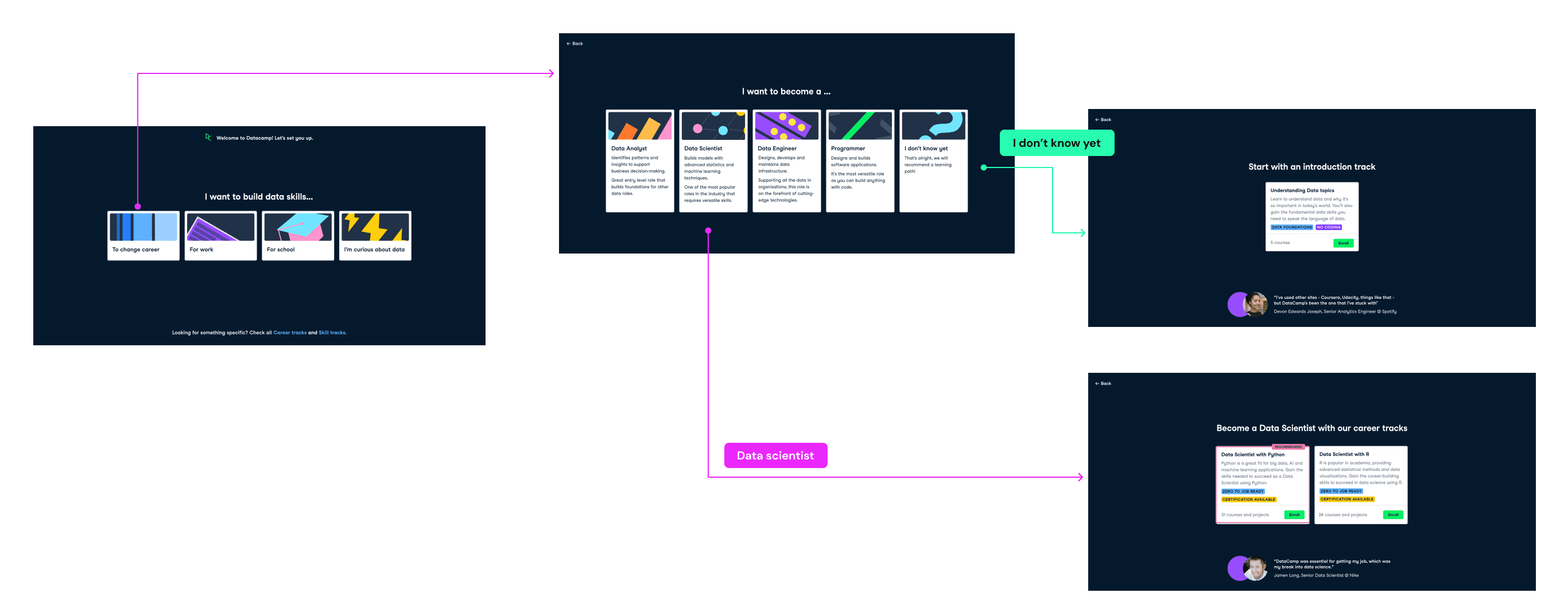
- Step 2 - Career Switchers: Clearly explained key points about data science career paths. Added "I don't know" option so that we can triage people into introductory tracks without forcing them into big choices.
- Content & Track Cards: Improved copy and added popularity tags to make it simpler to choose
- Confidence Boost: Included learner testimonials about career changes
Fig. All the possible pathways for onboarding had to be taken into an account
An example of a flow for someone who is interested in changing a career. As it happens many people can't chose a specialization (Data Analyst, Data Science, Engineering etc) so "I don't know" option was added so that learners can take an introductory course
Details
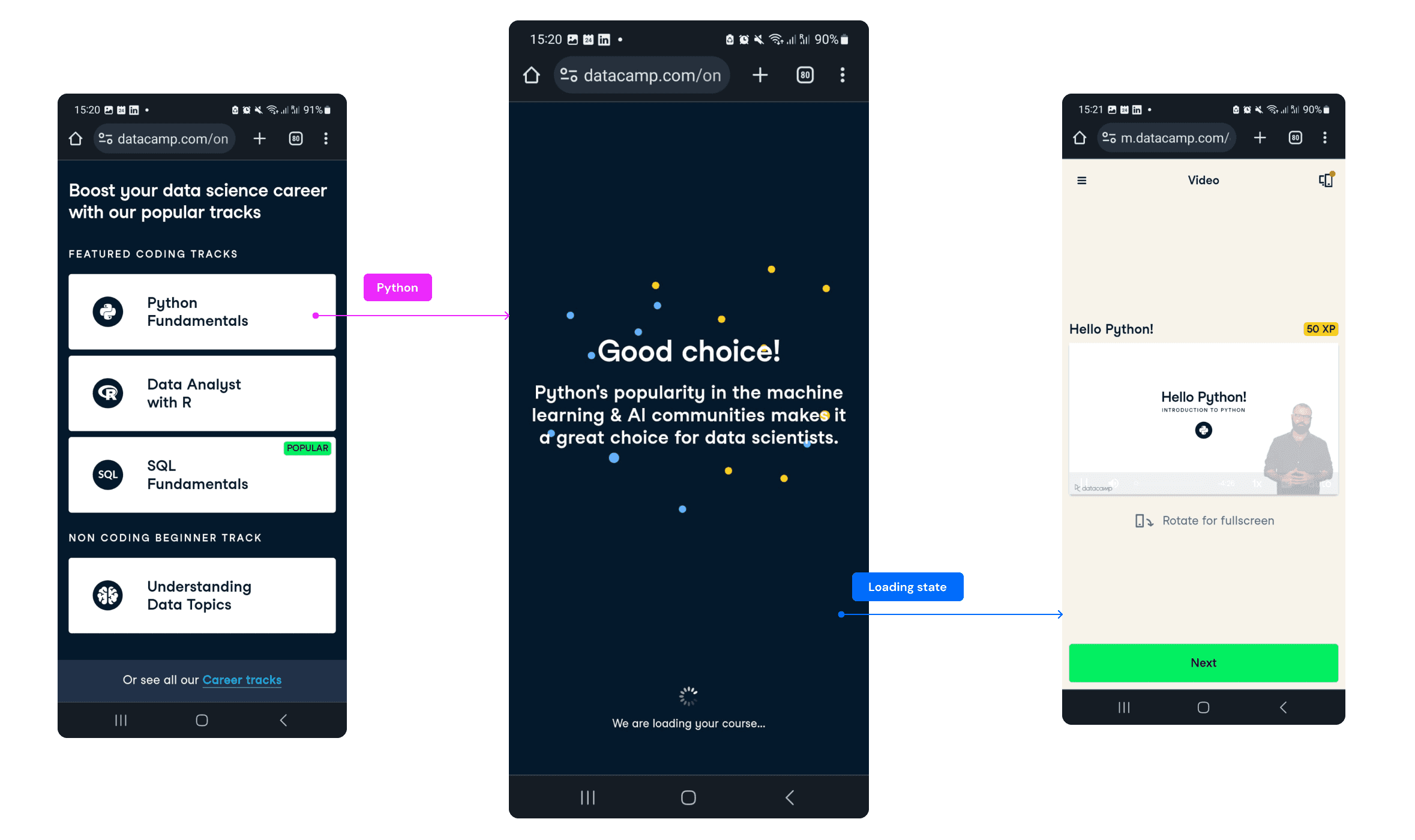
Mobile is a different species of experience. Our solution was to cut a number of choices and eliminate goal selection to reduce time on task in sign up to content flow. We selected Skill tracks in 3 most popular technologies (Python, SQL and R) and offered one no-coding track.
- Simplified Choice: Offered pre-selected skill tracks
- With a split into sections with clear labels: Featured coding tracks and No coding beginner track.
- Choice Confirmation: Replaced plain loading screen with an affirmation message about the choice of technology they made.